Spray Foam United States
Comfort is Achievable in Arizona
WALLTITE® and ENERTITE® SPF Insulation
High-Performance Spray Foam for Energy-Efficient Homes
Homebuilder Cuts Cooling Costs by Up to 45% in Arizona
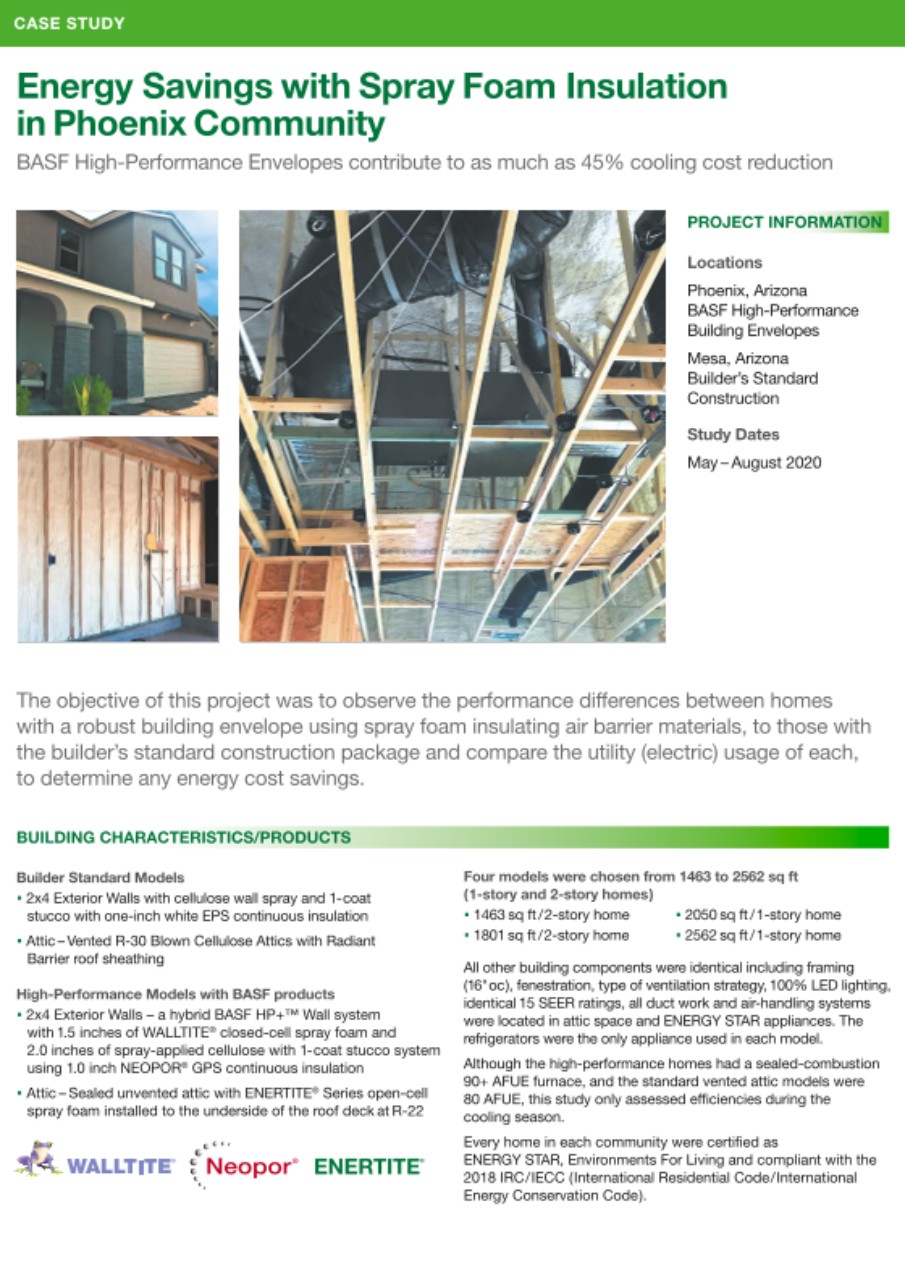
In one of the hottest housing markets in the U.S.—literally and figuratively—a local homebuilder in Phoenix partnered with BASF to compare two construction methods: their standard build package versus homes insulated with BASF’s high-performance building envelope. The goal was to evaluate how advanced spray foam insulation could impact comfort, energy efficiency, and overall livability in the face of Arizona’s blistering summer temperatures.
The study focused on four model homes ranging from 1,463 to 2,562 square feet, constructed across two communities—one with the standard building method and one with BASF’s upgraded insulation package.
Project Overview:
Location: Phoenix, Arizona residential community
Comparison Location: Mesa, Arizona residential community
Dates: May – August 2020
Featured Applications: Attics and ceilings, walls, bonus rooms
Project Type: Residential builder case study
Home Models Studied: Four model homes ranging from 1,463 to 2,562 sq. ft.
Standard Construction: 2x4 exterior walls with cellulose wall spray, 1-coat stucco, 1-inch white EPS continuous insulation, vented R-30 blown cellulose attics with radiant barrier roof sheathing
High-Performance BASF Envelope: Hybrid BASF HP+™ Wall system with WALLTITE® closed-cell spray foam, spray-applied cellulose, NEOPOR® GPS continuous insulation, and ENERTITE® open-cell spray foam in a sealed unvented attic
A Smarter Approach to the Building Envelope
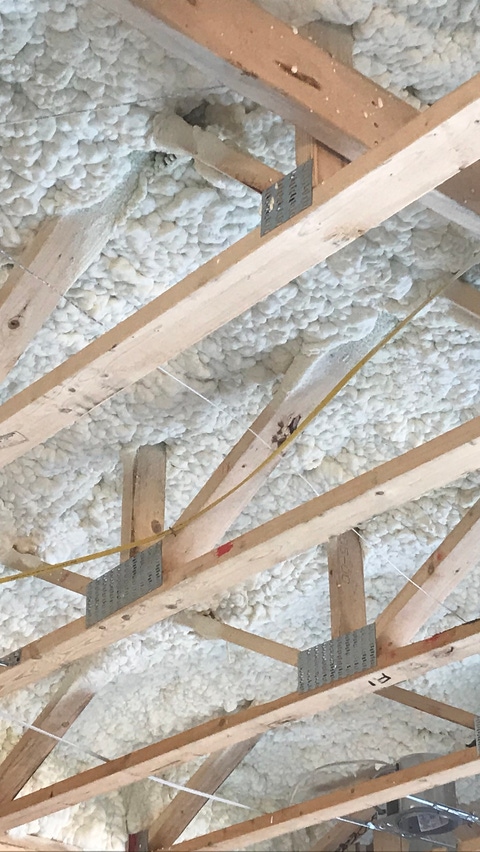
The high-performance homes featured a hybrid wall system combining closed-cell WALLTITE® spray foam, spray-applied cellulose, and NEOPOR® GPS rigid insulation. To complete the envelope, an unvented attic was sealed with ENERTITE® open-cell spray foam applied to the underside of the roof deck, eliminating the need for radiant barrier sheathing.
This design not only improved thermal insulation but also created a semi-conditioned attic space where mechanical systems could operate more efficiently. Even during peak summer months when outdoor temperatures soared past 115°F, data loggers recorded attic temperatures no higher than 83°F.
Beyond Cost: Comfort, Health, and Performance
- Less air leakage, helping reduce dust, fibers, and allergens indoors
- More consistent indoor temperatures from room to room
- Reduced HVAC strain and more efficient runtime
- Greater year-round comfort, even in extreme desert heat

Real Energy Savings Backed by Data
From May to August 2020, electricity usage between the standard and high-performance homes was closely tracked. The results were undeniable.
On average, homes built with the BASF system used 32% less electricity compared to their standard counterparts. One floorplan in particular—at 2,562 square feet—achieved a 45% reduction in cooling costs, saving nearly $680 in just four months.
These aren’t just numbers. They represent tangible savings for homeowners. In fact, the monthly energy savings in that larger model equate to about $170—a financial benefit that could translate to $30,000 in additional home financing under a typical mortgage.
We are constantly looking for ways to improve our homes and make them more comfortable for our homeowners. The energy savings these homes showed confirms our move to spray foam is a good choice.